

Quick Answer: HELOC vs Refinance in Ontario
A HELOC offers flexible access to your home equity with a variable interest rate, while refinancing replaces your mortgage with a new loan, often at a lower fixed rate. In Ontario, refinancing is typically better for large debt consolidation, while a HELOC is better for flexible, ongoing borrowing needs.
Why This Decision Matters More in 2026
If you’re like many Ontario homeowners, you may be:
- Sitting on significant home equity
- Carrying high-interest debt
- Feeling pressure from rising living costs
This creates a common situation:
“I have equity, but my monthly cash flow still feels tight.”
Choosing between a HELOC vs refinance in Ontario isn’t just about rates; it’s about building a strategy that actually improves your financial situation.
What Is a HELOC in Ontario?
A Home Equity Line of Credit (HELOC) allows you to borrow against your home equity as needed.
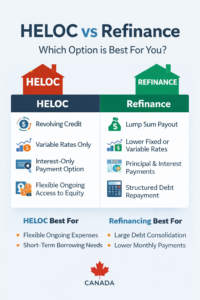
Key Features
- Revolving credit (like a credit card)
- Variable interest rates
- Interest-only payment options
- Reusable credit after repayment
Best Uses
- Renovations
- Emergency expenses
- Short-term borrowing
- Income gaps (self-employed borrowers)
What Is Mortgage Refinancing?
Refinancing means replacing your current mortgage with a new one to access equity.
Key Features
- Lump sum payout
- Lower interest rates (typically)
- Fixed or variable options
- Structured repayment plan
Best Uses
- Debt consolidation
- Lowering monthly payments
- Financial restructuring
HELOC vs Refinance in Ontario: Side-by-Side Comparison
|
Feature |
HELOC |
Refinance |
|
Interest Rate |
Variable | Fixed or Variable |
|
Payments |
Interest-only option | Principal + Interest |
|
Flexibility |
High | Low |
|
Discipline Needed |
High | Moderate |
|
Best For |
Ongoing needs | Large debt consolidation |
Which Option Saves You More Money?
Short Answer
- Refinancing = lower long-term cost (for large debt)
- HELOC = flexibility but potentially higher total cost
Why Refinancing Often Wins
- Lower interest rates
- Structured repayment (you actually reduce debt)
- Less temptation to reuse credit

Real Ontario Example: $80,000 Debt Scenario
Scenario
- Credit card debt: $80,000
- Interest rate: 19.99%
Option 1: HELOC (~7%)
- Monthly payment: ~$467 (interest-only)
- Debt remains: $80,000
- Risk: long-term interest accumulation
Option 2: Refinance (~5.5%)
- Monthly payment: ~$500
- Debt decreases over time
- Clear path to becoming debt-free
👉 Key Insight: Lower payments don’t always mean lower cost.
When a HELOC Makes More Sense
Choose a HELOC if you:
- Need flexible access to funds
- Have ongoing expenses
- Are financially disciplined
- Don’t want to break your mortgage
When Refinancing Is the Better Strategy
Choose refinancing if you:
- Have large high-interest debt
- Want predictable payments
- Need monthly cash flow relief
- Want a long-term plan to eliminate debt
Risks to Watch Out For
HELOC Risks
- Rising variable rates
- Re-borrowing habits
- Lack of structure
Refinance Risks
- Mortgage penalties
- Restarting amortization
- Qualification requirements
How to Decide: Simple Framework
Choose HELOC if:
- You need flexibility
- Debt is short-term
- You’re disciplined
Choose Refinance if:
- You want to eliminate debt
- You need lower monthly payments
- You prefer structure
Key Takeaways
- A HELOC offers flexibility, but requires discipline.
- Refinancing reduces debt faster and often saves more money.
- The right choice depends on your goals and habits.
- Large debt = refinancing is usually better.
FAQ: HELOC vs Refinance Ontario
Is a HELOC better than refinancing in Ontario?
It depends on your goal. HELOCs offer flexibility, while refinancing provides structure and long-term savings.
Can I switch from a HELOC to refinancing later?
Yes, many homeowners start with a HELOC and later refinance.
How much equity do I need for a HELOC in Canada?
Typically, at least 20% equity is required.
What is the biggest risk of a HELOC?
Ongoing debt due to its revolving nature.
If you’re not sure which option is right, a quick review can help you:
- Understand your options
- Compare real numbers
- Build a strategy that improves your cash flow
👉 Contact us today to explore your options.